


Child friendly cities
19th May 2025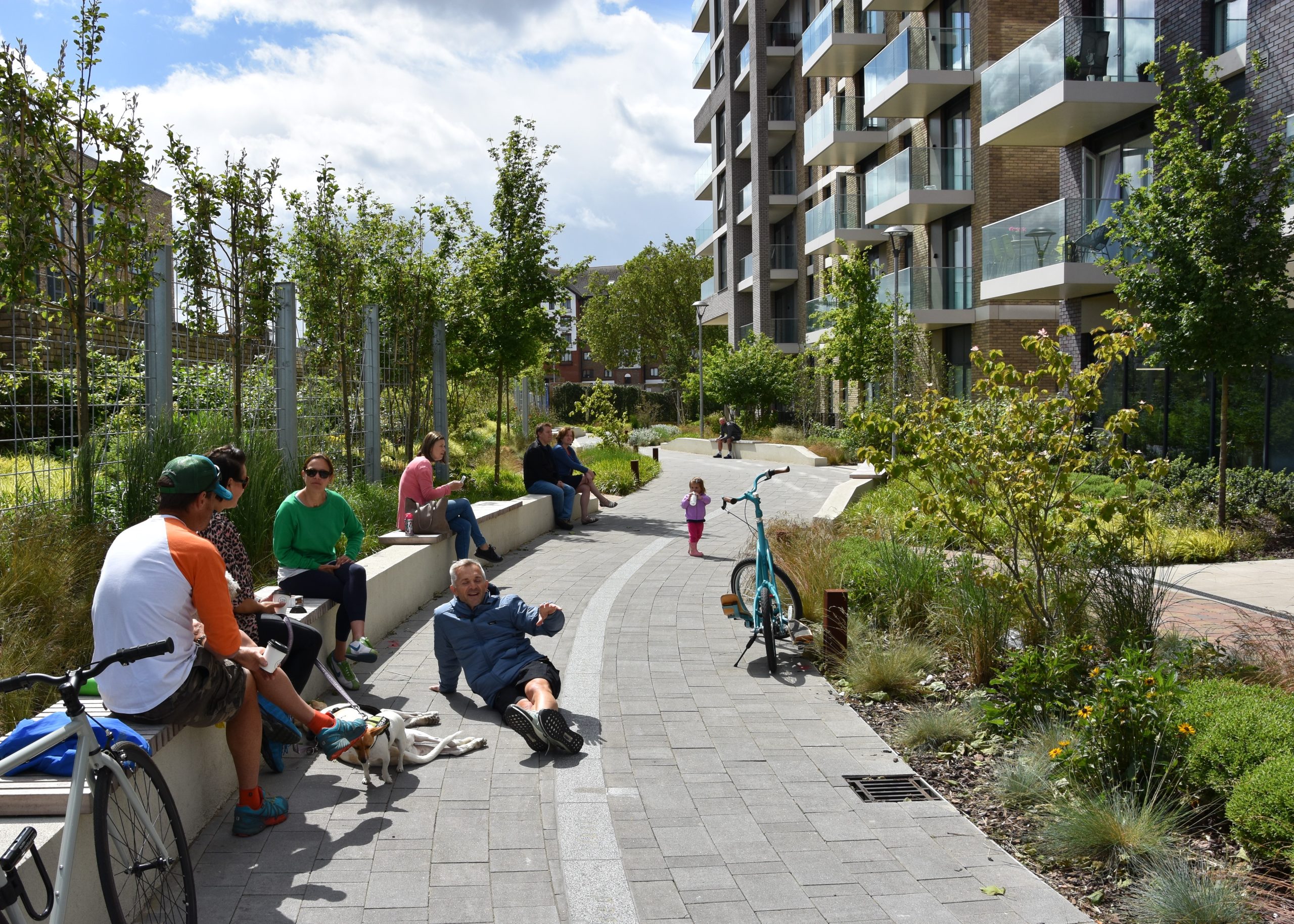
A different way of doing things?
Are you a city dweller? Have a think about where you live. Do you see children out and about, independently travelling around, playing on the streets outside or interacting with nature without being closely supervised? Are children mainly in playgrounds, safe yet separated from other parts of the public realm or are they interacting in public spaces, playing freely and safely?
What is it about the design of cities that inhibits children from roaming freely? And, if we design differently and create cities that are more child friendly, will such designs help all those who live in cities and not just our younger generation? Because in practice, cities that do not meet the needs of their children put themselves at risk of becoming ‘child deserts’, as young families move towards the outskirts or away altogether, schools close and cities’ economies suffer.
Here at Outerspace we are constantly asking ourselves how we can do things differently. Can we, as landscape architects and urban designers, create intricately linked webs of spaces, streets, natural corridors and safe passages, that help to re-weave children back into city life in a way that proves beneficial to us all?
What do we need to learn and change in order to create child friendly cities?
What is a child friendly city?
The Child Friendly City Initiative describes a child friendly city as “a city, town or community in which the voices, needs, priorities and rights of children are an integral part of public policies, programmes and decisions.”, highlighting nine key elements that must be in place for a city to be child friendly. That children must:
- Be protected from exploitation, violence and abuse.
- Have a good start in life and grow up healthy and cared for.
- Have access to quality social services.
- Experience quality, inclusive and participatory education and skills development.
- Express their opinions and influence decisions that affect them.
- Participate in family, cultural, city/community and social life.
- Live in a safe, secure and clean environment with access to green spaces.
- Meet friends and have places to play and enjoy themselves.
- Have a fair chance in life regardless of their ethnic origin, religion, income, gender or ability.
In order to meet these elements a child-friendly design approach, at the very onset of urban planning, is essential.
A child-friendly design approach moves beyond the simple provision of playgrounds and play calculations, instead bringing a holistic angle to masterplan design; where the children who will live in the spaces are considered first, ultimately creating inclusive cities that work better for all those who live there.
A child’s view?
Responsibility for town planning in the UK predominantly sits within local governments, however other stakeholders such as private developers, retailors and academic institutions are often involved. It is also true that children are often neglected stakeholders when decisions about transportation, pollution and well-being are made.
In his book “Urban Playground” Tim Gill highlights that “the vast majority of urban planning decisions and projects take no account of their potential impact on children and make no effort to seek children’s views.”
Ultimately, designing cities for children means so much more than simply providing playgrounds. It means truly working with children and seeing the streets through their eyes.
The Bernard van Leer Foundation’s Urban95 project asks “If you could experience the city from 95cm – the height of an average three-year-old – what would you change?”
VR95 is a tool that allows you to experience a city through the eyes of a child, shrinking you down to their size so you can begin to understand how it feels.
A critical component of child-friendly urban planning is prioritising opportunities for learning and healthy development both in and out of school, putting children and the way they experience the urban environment at the heart of design is key to making this happen.
Real life examples from across the world?
When considering child-friendly cities a few examples below inspire us through their innovative approaches:
In Vauban, a district in the German city of Freiburg a research study into children’s play and independent mobility influenced the masterplan design that focused on walking and cycling networks and accessibility to green public space.
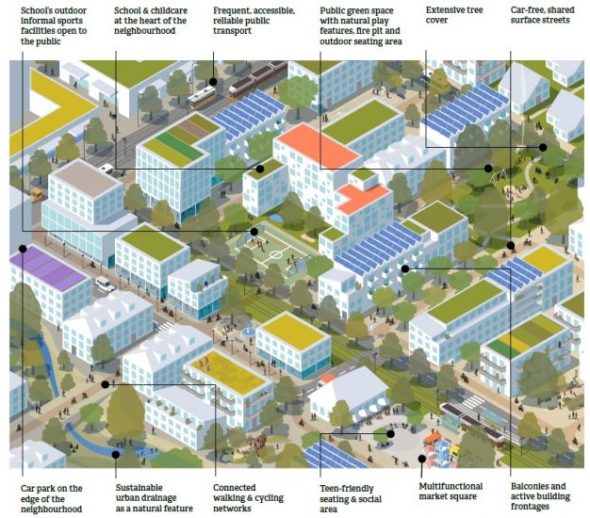
Image credit
In Niteroi, Rio de Janeiro, Brazil, the “Feel free to breastfeed” project created public spaces that included comfortable seating, shade, shelter, play space, and access to drinking water; all key elements to allow breastfeeding to feel safe, welcomed and accepted.
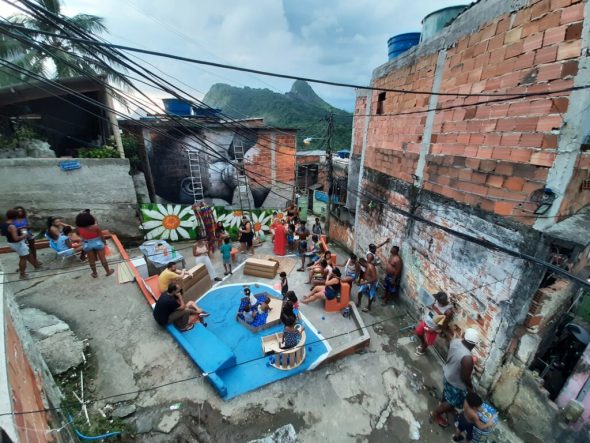
Image credit
In London, England, the 2021 London Plan, states that ‘education and childcare facilities should be in locations that are easily accessible on foot, by cycling or using public transport’. Many city councils have showed how this can be put into practice through the introduction of ‘School Streets’ , where certain streets, within proximity of schools, are closed during certain times or slower traffic speeds are enforced (with exemptions). The aims of such initiatives are to provide safer passage to those children who walk or take public transport and encourage those families who do not walk, but can do so, to make the change. Analysis of the impact of the schemes showed that drivers and cyclists on surrounding streets slowed down to allow people walking to safely cross, with average speeds being reduced by up to 6.3 mph in the hours of operation. This last finding is particularly significant when considering that a large proportion of deaths on roads occur in zones with a 30mph speed limit.
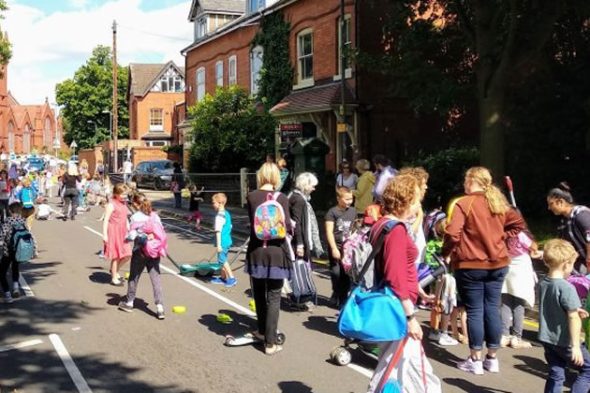
Image credit
In Cerrillos, Santiago, Chile a primary school and a local park were connected by temporarily pedestrianising a street, creating a safer space for nearly 350 children. After the implementation of the pedestrian zone, pedestrian volumes increased by five times, and caregiving activities doubled in front of the school.
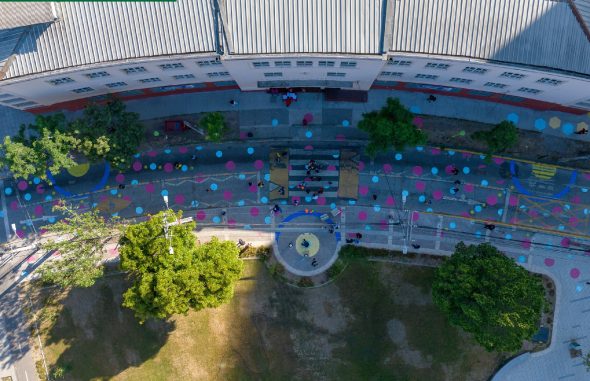
Image credit
In Beirut, Lebanon a dull concrete staircase between neighbourhoods was transformed into a playground, with seating, shade, slides and planting being retrospectively fitted to create a lively social hub. Outerspace did something similar, albeit for adults, with our Moretown project.
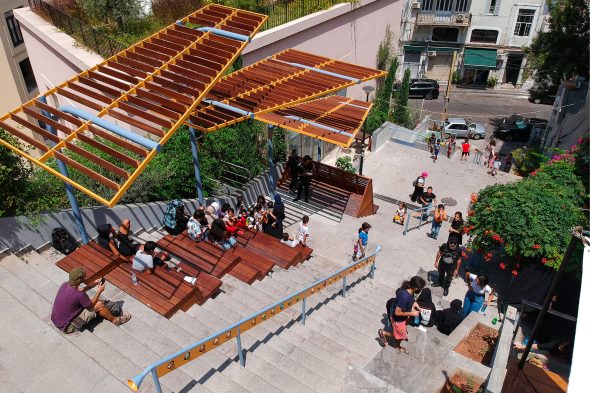
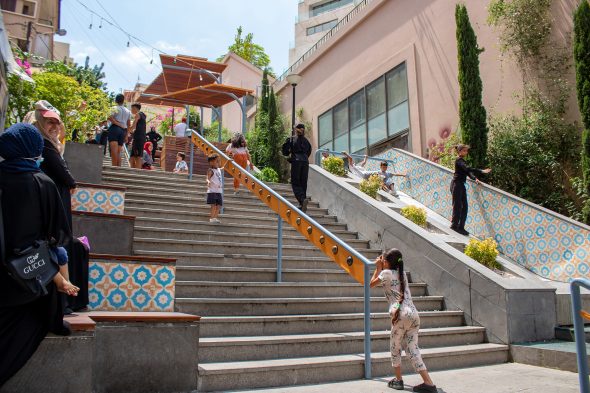
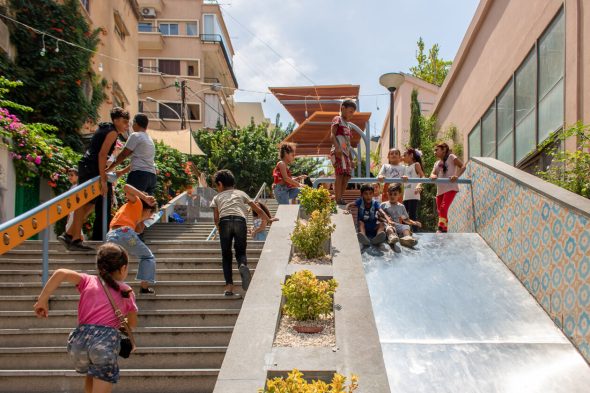
Image credit
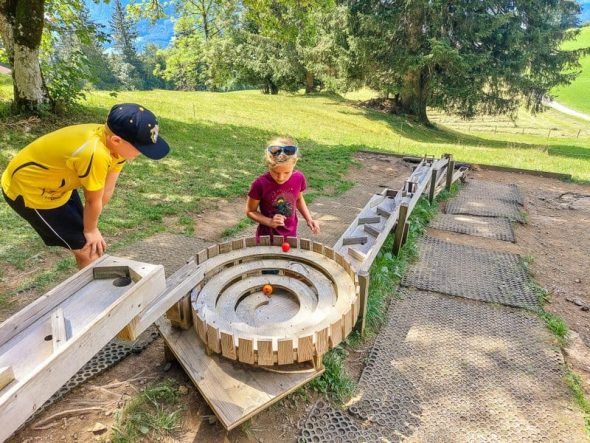
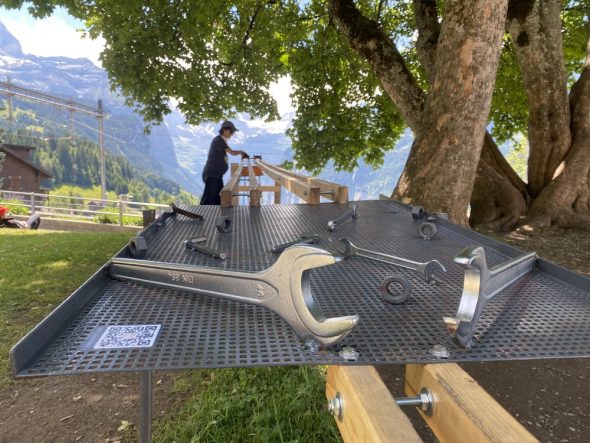
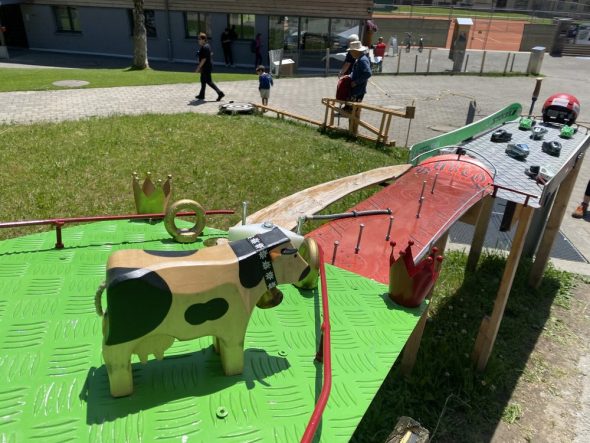
In the Swiss mountain village of Wengen, families are encouraged to explore beyond the town centre by the creation of a massive marble run.
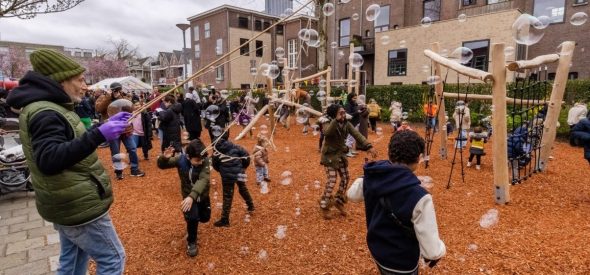
And in Rotterdam, a city once found to be the worst place to raise a child in The Netherlands, the Oude Noorden neighbourhood was redeveloped to decrease and discourage traffic and make public spaces more child-friendly.
Creating a child friendly city
Our children grow through experience and independent learning, this may be one of the reasons why they are so drawn to the outside world; more than eight in ten children and young people (85%) agreed that being in nature made them very happy. However, a 2017 study showed that fewer than a quarter of children meet the minimum daily physical activity recommendations. This is particularly concerning when, according to the WHO, physical inactivity could be one of the top 10 causes of death and disability in the world.
At Outerspace we strive to be part of making a change and leaving a better world than the one we find, but how can this be done? Below are a few examples of changes that can be made to make cities safer, greener and more accessible for children and adults alike:
Safe Walking and Cycling Infrastructure, Especially Around Schools
Designing safe access for children to key infrastructure such as schools, parks, libraries and community centres is essential. Streets designed with child safety in mind will not only prevent road injuries and deaths, but allow children to feel comfortable and encourage independence.
Design with the eye level and cognitive abilities of children in mind
Closely linked to the above point is the need to consider a child’s size, their still developing cognitive skills and perception of danger. Urban planners should consider the built environment through the perspective of a child, closely focusing on mobility between public spaces. Traffic free routes, linear parks, well placed barriers, crossings painted in vibrant colours, raised crossing, curb extensions and pedestrian islands can all be used to make mobility safer and more enjoyable. Well placed raised planters can be used to slow traffic or create pedestrian and traffic separation, both achieving a design aim of increased safety and bringing an opportunity to increase biodiversity.
Green space that is accessible to all
We all know the importance of green space on childhood development. Designing urban landscapes with more green space, and retrospectively increasing green space when redeveloping neighbourhoods, can be key to enhancing both mental and physical well-being. Increasing green spaces also encourages biodiversity, allowing curious children to meet more bugs and birds face to face! A child-friendly city cherishes green spaces and the holistic benefits they bring.
Incorporating play designs into pedestrian walkways
We all know children will play almost anywhere! Designers can insert pockets of play into streetscapes to make the urban environment more child friendly. Design techniques such as mowing ‘secret paths’ through streetside wildflower planting, adding vibrant colours and shapes onto walkways, developing benches, water fountains, and even handrails in ways that encourage play and adding playful objects along the sides of streets can all help to spark the endless imagination of our children.
Shade, shade and more shade
As mentioned above, children will happily play almost anywhere. But playing in full sun creates discomfort and risks skin damage. Trees and canopies can be retrospectively added to playgrounds and public seating areas, allowing children and adults alike to remain for longer, protected from the sun’s rays. Including more trees also brings with it the added benefit of increasing biodiversity and reducing urban heat island effect.
Some examples of projects created by Outerspace
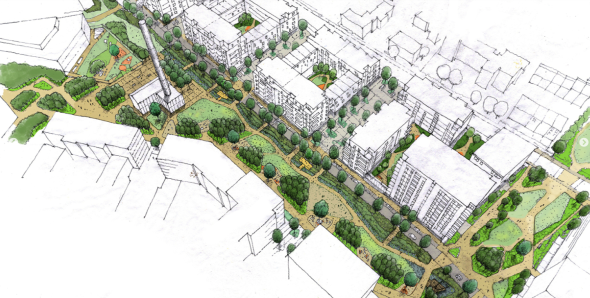
Kodak Harrow – A naturalistic-industrial park weaving through a major residential masterplan on the edge of Harrow.
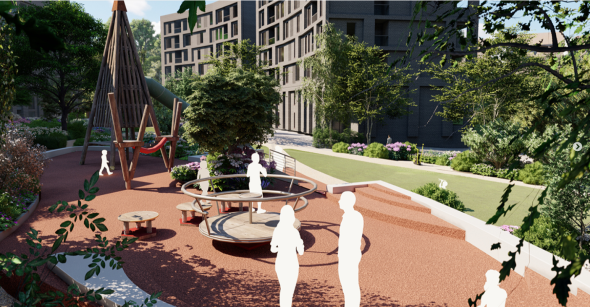
Parkside, Lewisham – A community led design for this neighbourhood park will be the centre piece of this estate regeneration scheme.
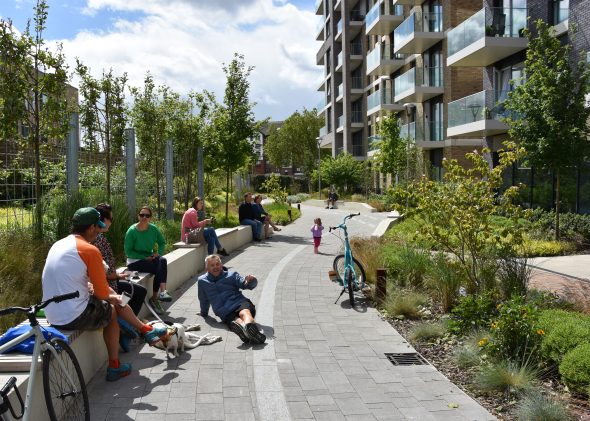
Queenshurst, Kingston – A new linear park projecting the ghosts of the site’s past. Local school children were involved in the researching and writing facts, figures and poetry to be inscribed in a serpentine paving feature that weaves through the space.
Our final thought
Outerspace believe that a child-friendly approach to urban planning benefits not only children but the whole community. Child-friendly design means offering hybrid spaces that are accessible to all, inviting exploration, diversity of use and interweaving the generations. This means being experimental, brave and bold.
Written by Kate Kershaw, Practice Manager