


Reflecting on the Building Safety Act on Landscape Architecture
15th October 2025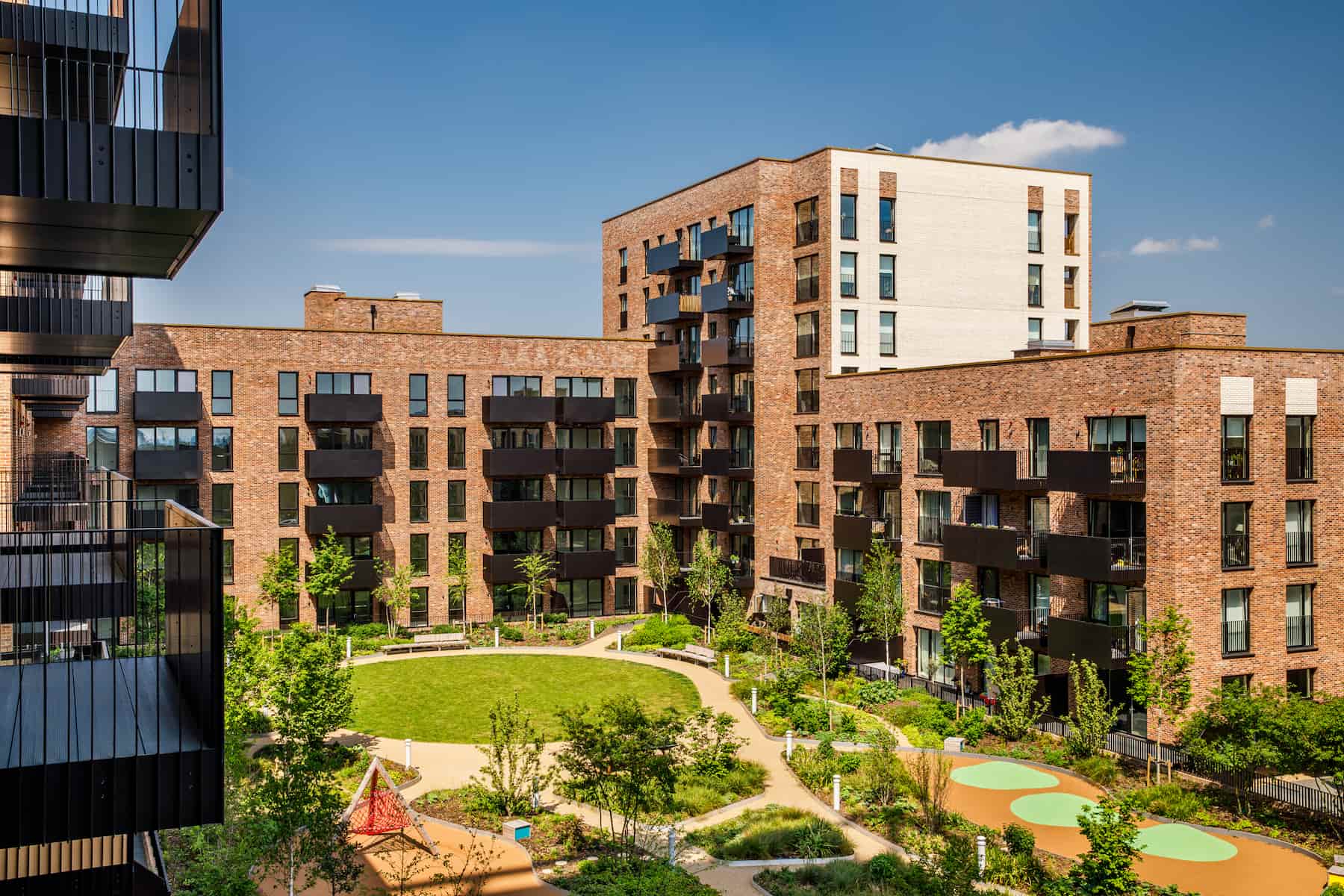
Image: Outerspace Coronation Square Project – Taylor Wimpey
Outerspace have been fortunate to work on a wide range of schemes in inner London, many of which tower over 18m. The Building Safety Act 2022 (BSA), has created a number of challenges over the past few years across all disciplines in the building industry, and, as Landscape Architects, it has been interesting to reflect back on the how we have had to adapt and the lessons we have learnt along the way.
Early Consideration
Whilst the BSA does not directly look to mitigate issues caused by landscape proposals; many of the measures it seeks to address, do have a knock-on effect to the final proposals. It is surprising how many schemes make it through to gaining planning approval without taking into consideration the effect the Gateway Two (GW2) process can have on a scheme. This can result in extensive redesign being required, which can consequently water down the original concepts and pose a risk when it comes to discharging landscape conditions. This can be particularly challenging when factoring in Urban Greening Factor calculations (UGF) and, in some cases, play & open space calculations. Such calculations are already all too easily eroded by the introduction of fire breaks or unrealistic setbacks, which result in them falling below the original consented schemes targets.
At Outerspace we are increasingly building allowances into our designs, using our post planning experience to make allowances in our planning schemes, to help ensure that the finished product is as close to the original design concept as possible.
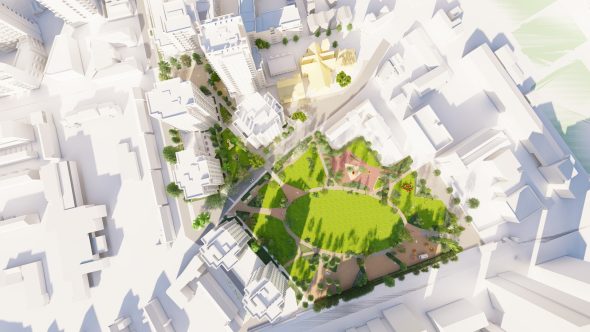
Image: Outerspace Teviot Estate Project – Hill
Coordination
As with any design process, coordination with your fellow consultants towards a common shared goal is important, but, when it comes to the additional pressure of a GW2 submission, it absolutely crucial. Building strong working relationships with the design to team and promoting an appreciation for all disciplines, has been hugely beneficial in overcoming issues and meeting deadlines in a calm considered way. This can quite often lead to a degree of pride swallowing for us as Landscape Architects as the pressures on designs can frequently impact external spaces, making it important to be adaptive and evolve designs to absorb change.
Amenity space at height
Over the past 10 years, pressures at ground level have increased the need to maximise podiums and roof tops for play and amenity, and, with many schemes looking to stay under the Higher-Risk Building (HRB) threshold, there has been a push to increase the mass of the building footprint and create rooftop gardens; which are not currently counted as storeys by the Building Safety Regulator (BSR).
Whilst this creates an opportunity for developers to maximise unit numbers on a site, the needs to be backed up excellent roof top design, that critically, coordinates and integrates all the disciplines who seek to occupy the space for plant; Soil Vent Pipes, Photovoltaic Systems, lift overruns, ventilation, ecology and space for residents to enjoy a vista over the wider landscape etc. So, while this point is not directly related to the BSA, it is important to appreciate the knock on effects to other developments.
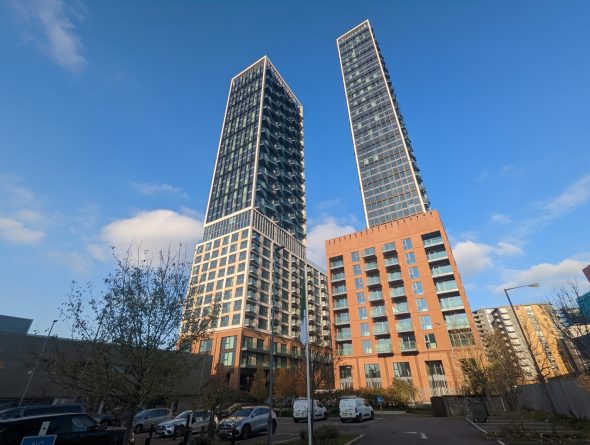
Image: Outerspace One West Point Project – Panayi Group
The Edges
Any external materials that form part of the external wall system (e.g. cladding, façade attachments) have stricter rules. As Landscape Architects we need to know the specifications of such materials; fire performance, how they interact with walls, etc. Where external wall design is involved (in façade-landscape interfaces, terraces built into the building, planters attached to external walls, etc.), the materials and detailing may need to satisfy the fire-safety regulations and external wall information duties.
Maintenance
External spaces must be maintainable in safe ways (e.g. access for maintenance, fire-escape routes not obstructed by landscaping etc.). Early consideration of these principles, incorporated into concepts, can make schemes far more robust. The safety case for HRBs includes how the building will be kept safe in occupation, this means external spaces must be included. Landscape Architects need to anticipate long-term maintenance and safety risks: for example, root growth affecting walls, external wall cladding, drainage failures, etc. Considered such factors in a schemes early infancy help to ensure the finished design reflects the early concept and approval.
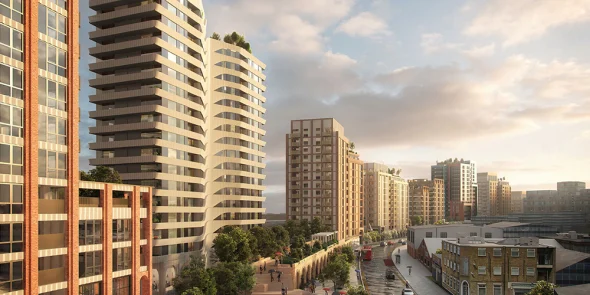
Image: Outerspace Bollo Lane Project – Barratt West London
What are the positive impacts of the BSA for Landscape?
It’s very easy to view the BSR as having a negative impact on our proposals, so it is important to finish this blog off by looking at the positive effects it can have on the work we do.
- All disciplines should be striving ensure that Grenfell is never repeated. All designers working on people’s homes, have a duty make sure we are using the very best design strategies and specifying the very best materials, to ensure these homes as safe as possible. We need to do this while still providing pleasant places for people to live. For us here at Outerspace, this remains the most positive impact of the BSA.
- Early engagement and collaboration on schemes, from conception, creates an opportunity for us as Landscape Architects to work alongside Architects and Urban Designers and take a more holistic approach to the design of external spaces. This inevitably leads to better integration with buildings (functionally, aesthetically, environmentally).
- Risk assessment has become embedded in landscape design. The consideration of fire spread, access for fire services, evacuation paths, how hard/soft landscaping might impact safety (e.g. combustibility, cladding adjacency, vegetation near combustible materials), is all being considered at a much earlier stage.
- Clarification about rooftop gardens not being storeys helps support amenity space, sustainability features, climate-resilience (e.g. green roofs) while keeping buildings under certain thresholds.
- There is greater recognition/requirement for competent professionals. Good Landscape Architects, who can demonstrate competence in safety, materials, detail and documentation will be more in demand and possibly better rewarded.
- Is estimated that there are over 5000 buildings in England that are requiring a degree of remediation work to replace unsafe cladding or insulation, with a significant number of those located within London. Whilst this a great shame from a sustainability point of view, it does create an opportunity for Landscape Architects to assist landowners and contractors in the process of protecting and replacing landscapes in which these buildings are situated. This can open up opportunities to improve tired, underutilised spaces, increasing the value of homes and, more importantly, creating a better environment for current tenants and leaving a lasting legacy for tenants of the future.
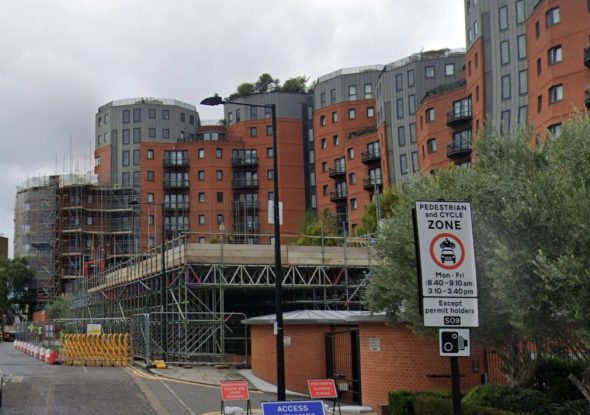
Image: Outerspace New Atlas Wharf Project – Thomas Sinden – Image Google Street View
In summary
Risk Assessment has become embedded in landscape design. The Building Safety Act is something that we are all becoming increasingly aware of and learning to approach and integrate into our designs in a positive way. We hope this short piece goes some way in helping demonstrate how Landscape Architects can positively approach the process and add early value to a development that includes a High Risk Building.
Written by Nick Willmore, Associate Director