


Biophilic play
17th July 2024
As a landscape designer, I’ve always been interested in play and how it encourages children to totally immerse themselves in the landscape. Now, as a mum, the importance of play and its impact on children’s development has been heightened further; I thought it only fitting to write about it and hopefully spark a discussion around it.
We’re all aware of the main benefits that play manufacturers seek to deliver on; benefits such as coordination, balance, strength, motor skills, cognitive growth, imagination, creativity, and social skills.
These are important, but we need to go further.
Biophilic play
As someone who was born in the country and then moved to the city, I particularly value the benefits of Biophilic play.
The benefits of biophilic design in architecture have been shouted from the roof tops for many years; restoration of physical and mental wellbeing, increased performance, concentration and better moods and connecting people and nature. It makes perfect sense to extend these benefits into the play environment. In urban environments, where external space is in high demand, one could argue that biophilic play is an absolute necessity, as it allows ecological habitats to co-exist with play so that both may benefit, while necessary quanta are achieved.
Biophilic play can be about immersing children in an environment that they aren’t necessarily aware of, or one that they don’t normally frequent, and using play to educate and inform. This way children can benefit from nature, and we can more easily raise a generation who care about the environment. In this time of climate crisis, we need to use play to better educate kids about their environment, different ecological habitats and how they share these with others. Barnes Wetland does this brilliantly, exposing kids (and adults) to marshland habitats and associated birds in a way that is interesting, challenging and playful, while being respectful and increasing natural marshland habitats.
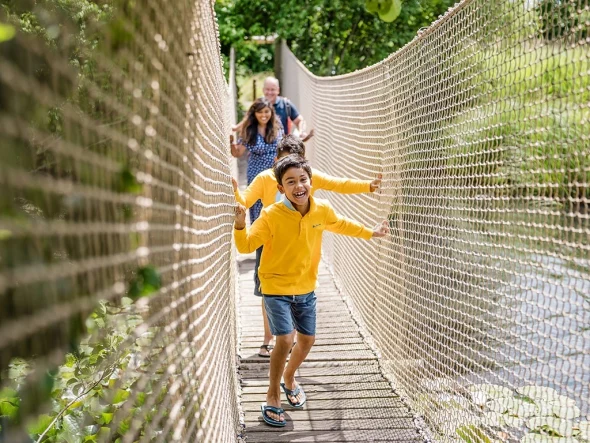
Barnes Wetland: Source London Wetlands Centre
Biophilic play can also be about bringing children closer to animals. Young kids in particular can find mini creatures and birds fascinating, so informing play with mini bug/bird habitats and building play around this can provide hours of fun and educate them further.
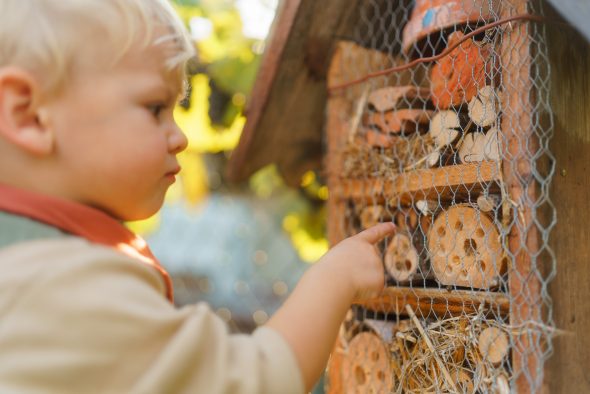
Mini bug play
At the other end of the spectrum biophilic play is about allowing natural materials to creep back into playgrounds. This can be as areas of grass, landscaped mounds, trees, planting, sand, bark mulch, water, timber and even mud! Brockwell Park is a really good example of an urban park that does exactly this; the play surfaces are mainly grass, landscape mounds, sand, rocks and mud, all of this is then linked together by well designed play equipment.
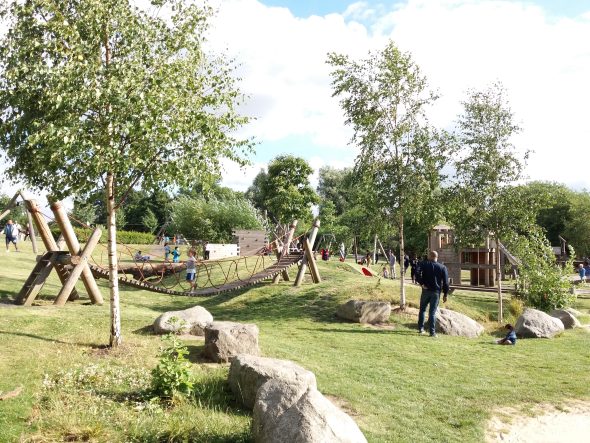
Brockwell Park
As an 80’s country girl I remember with fondness the mud kitchens and timber dens we used to spend hours with and the benefits of getting your hands dirty and feeling at one with nature.
Some of the National Trust properties do this well, installing elevated play within natural woodland and using play equipment to encourage den building.
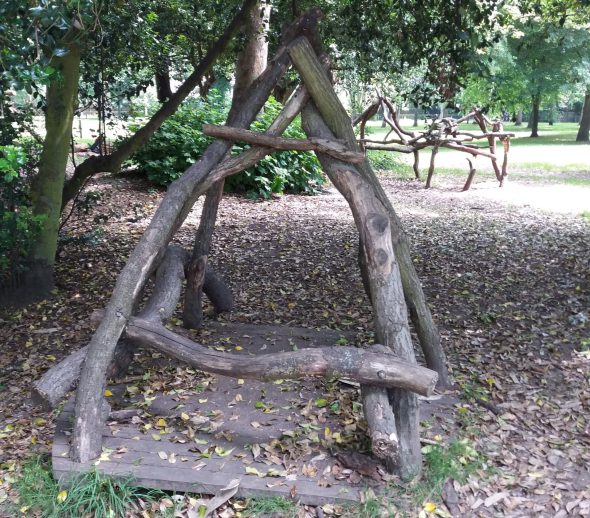
Den Building
Persil’s much loved ‘Dirt is good’ campaign was unique in it’s time for educating parents on the benefits of letting kids get dirty, and playgrounds, even urban playgrounds, should encourage this further. We shouldn’t allow playgrounds to become overly sterile and removed from nature.
Trees within playgrounds also have an enormous benefit, providing much needed shade from the sun in the summer and shelter from the rain and wind. At the same time they anchor the playground within nature, providing fruit/nut/seed/twig collection opportunities for little hands and encouraging nature into the playground for inquisitive minds to explore.
Biophilic design can also help with less formal playable landscapes that allow people and children to move from A-B. It can encourage toddlers and younger children to enjoy healthier lifestyles and in those early years to choose walking and running over buggies.
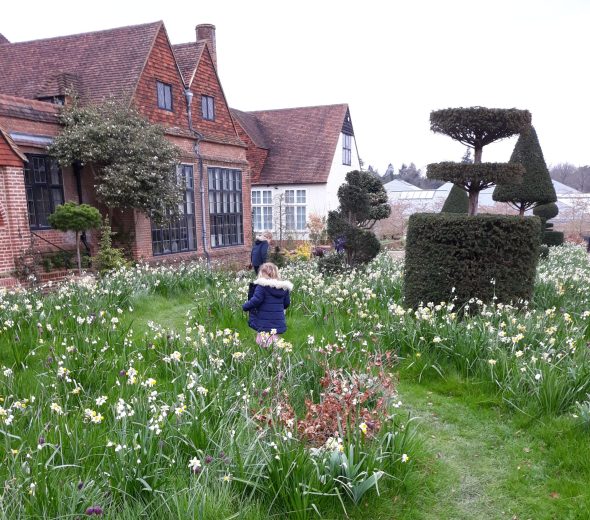
Wisley RHS: Mown path through bulbs
Recently my local river walk has been much enhanced by the creation of little play paths weaving through the planting, thus allowing a much easier walk between towns with little ones. Thank you to the volunteers at Kingston Riverside for creating such a beautiful environment and giving busy families a place for our kids to enjoy.
These pockets of playable landscape are in stark contrast to the all too common ‘Don’t walk on the grass’ signs and the security guards with an overwhelming presence found in many ‘public landscapes’. In my eyes, the best playgrounds have a strong sense of place, telling and reinforcing the narrative of the particular landscape setting in which they reside and using biophilic design to do this. Such playgrounds provide a forum for imaginative, educational play while connecting children with nature in a plethora of different ways. As a Landscape Architect, and a parent, I think this is something we should all be striving for.