


The Return of the Native?
16th September 2025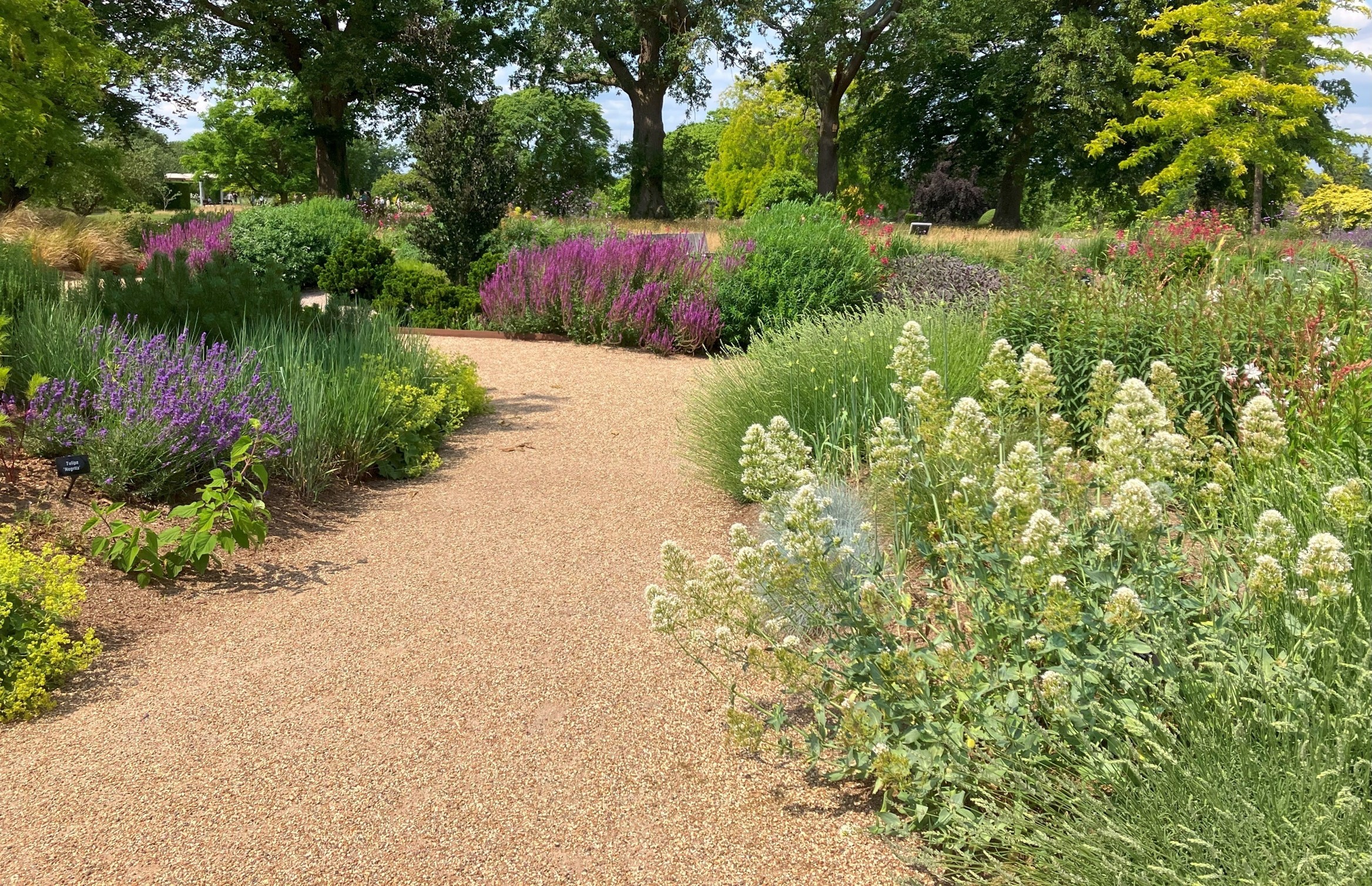
With BNG at the forefront of a lot of people’s minds, recently there has been a push towards purely native planting, even across high-density urban sites.
As landscape professionals, we must ask ourselves whether this is the right thing to do, both in terms of the communities who live within the sites we design, but also in terms of ecology – considering climate change and the long-term sustainability of the landscape.
There are obvious advantages to using native planting species, as native species create habitats that support existing local ecosystems and biodiversity. There’s also an undeniable truth that native species can maintain a sense of landscape character and link us back to our heritage.
However, there are also some drawbacks to planting purely native species. This blog considers each of these:
Climate resilience
By 2050 the climate in London is expected to be similar to Barcelona, so it begs the question as to whether we should be planting for our current climate or our forecasted one, especially with trees and shrubs, which should have longer life expectancies.
Different Arboretums (Hillier Arboretum, Kew Gardens etc.) have been looking into the resilience of different tree species in terms of climate change, and research has shown that native species are not always as good at adapting to climatic changes such as floods, droughts, high winds etc. as some ornamental species. The climate resilience research undertaken at The Botanical Kew Gardens has revealed that potentially 50% of their trees could be at risk by 2090, including many native favourites, like the common Beech, Holly and even pioneering Silver Birch. Kew have published a list of trees that they consider to be more resilient to climate change, and it is shocking to see so few native species on the list. Kew are expecting to diversify their plant species to include more non-native species that can better tolerate future predicted climates modelled. They are also looking to propagate ‘native’ species from adapted specimens, which already tolerate harsher conditions in other parts of the world – i.e. Quercus robur L.
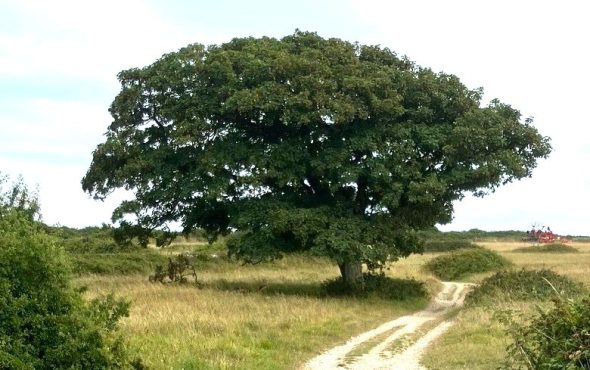
Image authors Own
Pollination/Bugs
Native species are often suggested to be better than ornamental in terms of promoting pollination. However, the recent RHS research on ‘Plants for Bugs’ highlighted that, although it is preferable to have a mix of planting containing a high percentage of natives, there is a real benefit to extending the flowering season with ornamental species and thereby increasing the period of the year where flowering/pollination is viable. To attract pollinators the RHS recommends “a mixture of plants from different regions, with a focus on growing native plants but using exotic plants to extend the flowering season”.
For most ground active invertebrates, not including spiders, RHS research found that denser vegetation resulted in a larger amount of ground active invertebrates, regardless of plant origin . Therefore, non-invasive evergreen species, no matter what the origin, were recommended – “Regardless of plant origin, the more densely a planting scheme is planted or allowed to grow, the more invertebrates it will support.”
Therefore, in terms of ecology, non-native northern hemisphere and southern hemisphere plants do also have a positive role to play in creating evergreen cover and extending the flowering season.
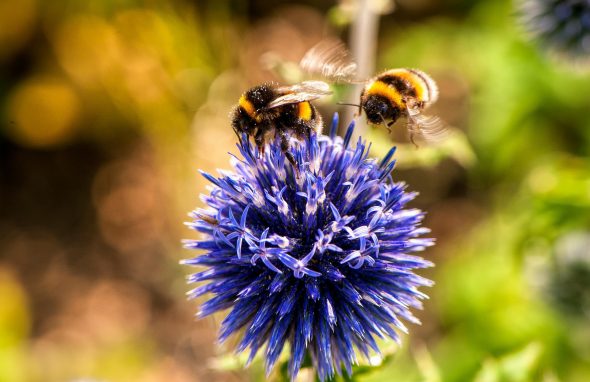
Image credit
Pests and Diseases
History has shown that our native tree species can often be specifically targeted by pests and diseases such as Dutch Elms disease, Ash dieback, Oak Processionary Moth, Pine Processionary Moth. There are also diseases that target ornamental species such as London Plane Wilt, but our native species don’t appear to be any more resilient to pests and diseases.
Interestingly in some situations, nurseries have been able to cultivate disease-resistant cultivars to our native species to allow the genus to survive in a different form – such as the Dutch Elm Disease-resistant Elms – Ulmus New Horizon etc.
Diversity
It has been noted that the British Isles and other parts of northern Europe suffer from a “paucity of native species“. At the same time, it is acknowledged that diversity of species is important when protecting against climate change, pests and diseases and so supplementing our native species with considered non-native species seems sensible. “Achieving an increased diversity of urban trees to improve the resilience of urban forests to future conditions is likely to involve greater use of non-traditional tree species, particularly in regions with relatively few native species, such as western and northern Europe”.
Specific urban drawbacks
There are also specific draw backs when we look specifically at wholly native schemes in urban and semi-urban environments:
Specific urban microclimates
There are a limited number of native plant species that can tolerate some of the harsher, urban-specific microclimates created by high density housing/buildings. These urban environments typically result in microclimates with a lot of deep shade, high wind and often dry soil. In nature, there are very few natural habitats that mirror this microclimate; deep shade is often found within woodlands and a sheltered environment – not an exposed one. Therefore, many native plants are often not suitable for these specific conditions.
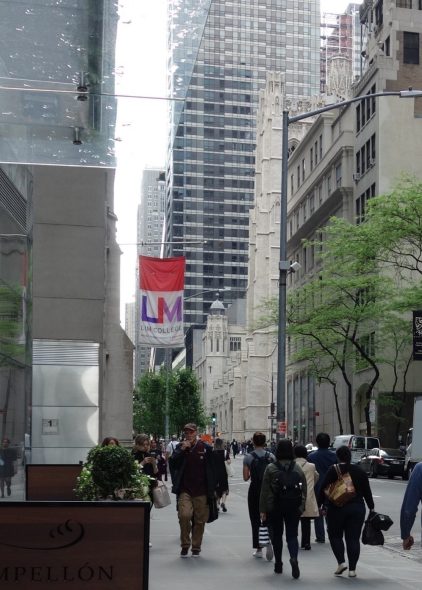
Image authors own – Streets of New York
Specific urban uses
The natural habits/forms/characteristics of native species are not always suited to their intended stricter urban requirements. For instance:
- There are very few native tree species with narrow canopies; fastigiate forms are all cultivated – even if sharing the same genus and species as our native trees; Crataegus monogyna stricta, Carpinus betulus ‘Frans Fontaine’ etc.
- There are a limited number of native species whose natural habits are suited to certain urban requirements ; naturally low-level defensible shrubs, below windows, reduced height for secure by design reasons etc.
- There are a reduced number of evergreen native varieties (sometime necessary from a wind mitigation perspective).
This, coupled with the limited number of native plant species that can tolerate some of the harsher, specific urban microclimates, means that if restricted to a purely native palette, it is much harder to specify “right plant for the right place” in urban environments.
Rather ironically, if designers are forced to specify fully native planting in these urban environments, as the number of varieties that are suitable for these environments is so limited, then a reduced palette of species has to be specified, which seems counter-intuitive in terms of biodiversity and resilience.
In some instances, if a fastigiate/small canopy tree cultivar cannot be specified, it means that we have lost the opportunity to plant a tree, which in turn can reduce greening opportunities in these environments, where it is much needed. Surely a non-native tree is better than no tree at all?
Conversely a lot of ornamental varieties have been cultivated for certain qualities that make them more natural solutions for these kinds of urban space.
Management of urban sites
As native species often do not naturally conform to their urban requirements, it often means that a more intensive pruning regime is necessary to keep these species in check in urban areas and often this is not achieved in the long term, resulting in negative impacts for the communities who live there.
Also to achieve sustainable long-term maintenance the community must ‘buy in’ to the landscape and want to help maintain these urban landscapes. Often in residential areas a more ornamental approach is preferred, as it tends to provide the community with more interest year-round in terms of longer flowering seasons and evergreen coverage.
Benefits of non-native planting
There are many advantages to non-native, ornamental planting. These are often widely accepted in terms of aesthetics, plants cultivated for their repeat blooms/large floral displays etc., but it is interesting that ornamental planting can also have ecological benefits. In addition to the points already made about pollinators and ground dwelling invertebrates, RHS research found that for plant dwelling invertebrates such as caterpillars and beetles, a majority of native plants in dense planting was best, but that non-native plants from the northern hemisphere supported only 10% fewer invertebrates, and those from the southern hemisphere supported only 20% fewer invertebrates then the native planting. So non-native species should not be ignored.
Ornamental planting has often been cultivated to be more robust and thrive in challenging conditions. The RHS Award of merit (AGM trophy) is a long-established, industry-wide, recognised award for plants based on a plant’s growing performance. It tests characteristics such as hardiness, longevity, flowering/fruiting abundance and quality, and resistance to pests and diseases. Obviously, not all ornamental plants have a trophy, but the award system demonstrates that ornamental plants can have benefits well beyond mere aesthetics.
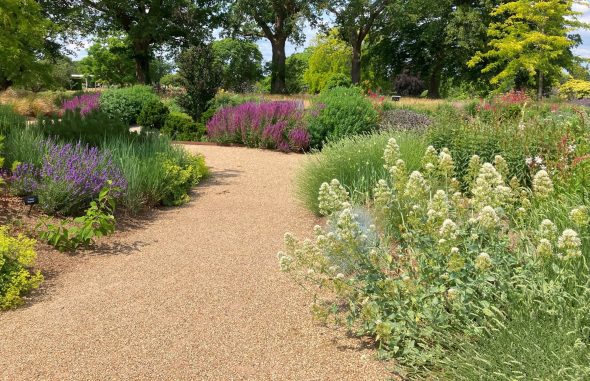
Image authors own – Ornamental planting at Wisley RHS Gardens
Conclusion
To summarise, there are many benefits to using non-native species, including resilience to climate change, resilience to pests and diseases, tolerance of harsh urban microclimates and their controlled habits and characteristics. Often these elements are overlooked in an overly purist desire to plant native. Therefore, it is our duty as landscape architects to see past the hype and continue to specify the best mix of native and ornamental for any given scenario, so we can always be planting the “right plant for the right place”.
Often in an urban/semi-urban context, this will be mix of ornamental and native planting, with a higher percentage of ornamental species in the high human usage areas and native species along the periphery and in ecologically sensitive zones, but each site needs to be analysed on a case-by-case basis.
Landscape architects and Ecologists need to work closer together to ensure that the planting being specified is not just appropriate for today’s climate, but the climate of the future, and we need to use our understanding of horticulture, ecology and the wider landscape to push back on the ‘wholly native’ band wagon, whether the push be from local authorities or local wildlife groups, as a little bit of ecological knowledge can be a dangerous thing and the specifying of plants and trees needs to be more than a check-box exercise.
Written by Venetia Sturdy, Associate Landscape Architect.