The importance of play and nature in childhood
20th November 2019
Our society is changing. Each day we utilise a plethora of gadgets and new technology and, whilst these innovations help us manage our busy lives, they also mean we rarely need to leave our screens in order to achieve our daily goals. We are becoming increasingly sedentary, as are our children.
Furthermore the human population is steadily gravitating towards our towns and cities, with around 90% of the UK population now living in urbanised areas. As our urbanisation increases so do concerns that we are becoming ever more disconnected from nature and that this is negatively affecting our wellbeing.
What effect does all of this have on our children?
In his influential book Last Child in the Woods Richard Louv argues that the effect is devastating, directly linking the lack of time spent playing outside to some disturbing childhood trends, such as the rises in obesity, attention disorders and depression. He summarised the disconnect as “nature-deficit disorder”. Louv believes that ‘children now wander less, discover less and are losing some important connections to nature and place’. Ultimately, Louv argues, children and therefore us adults too, are becoming increasingly divorced from the natural world that surrounds us. Worryingly there is growing evidence to support this concern; according to a 2008 National Trust report, British children now spend so little time outdoors that they are unable to name some of our most common creatures. The report found that one in three could not identify a magpie and half could not tell the difference between a bee and a wasp…yet nine out of ten could recognise a Dalek! Shockingly three quarters of children spend less time outdoors than prison inmates!
But are our children becoming disconnected with nature because they now predominantly live in towns and cities?
Moss (2012) argues that the assumption that disconnection is occurring because of urbanisation is an over simplification of the situation. In his report Natural Childhood Moss questions if parental fear and control is reducing childhood freedom as parents strive to keep their children safe. He questions if the issue of over the top Health and Safety concerns, and an obsession with trying to achieve a ‘zero-risk’ world, is severely limiting children’s freedom. Moss states that ‘our nation’s children are missing out on the pure joy of connection with the natural world; and as a result, when they grown into adults they lack an understanding of the importance of nature to human society’. However Moss’s thoughts are not new; renowned architect Aldo Van Eyck’s city-based playgrounds were designed to encourage a more relaxed attitude to risk and to enhance children’s sense of urban ownership. He designed play areas that provided children with an array of nonformal structures – rather than swings, slides and other playground staples – by doing this he believed that their creativity would be ignited and their imagination could run wild.
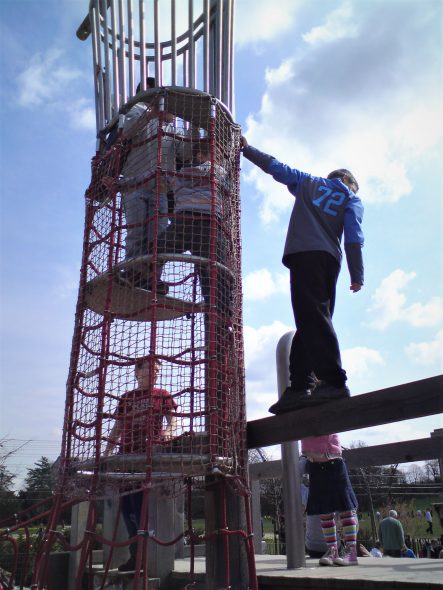
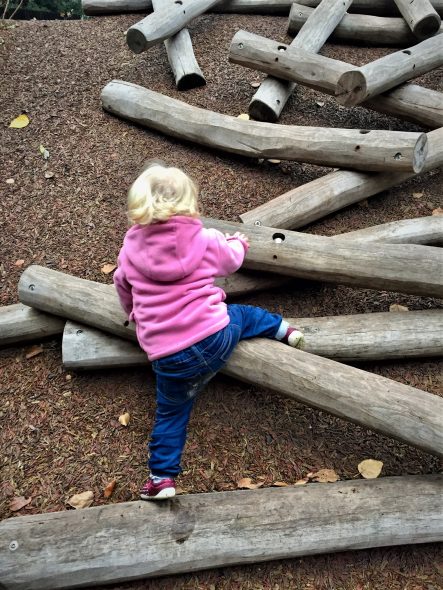
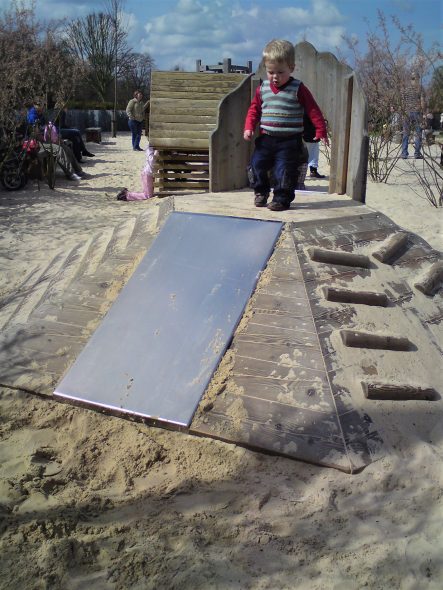
Children as indicators?
Urbanisations does not have to mean our children cannot spend quality time outdoors; well thought out urban planning can create areas within towns and cities where children can feel free to explore whilst their parents feel comforted that they are safe. Enrique Peñalosa; Mayor of Bogota states that “Children are a kind of indicator species. If we can build a successful city for children, we will have a successful city for all people”. Dinah Bornat builds upon this by highlighting that “children are generators of community life” and a street where children are visible is generally seen as being vibrant and safe. Furthermore Aldo van Eyck believed that the playground was the place where the child could be “lord of the city”.
How can we move forward?
There is overwhelming evidence that getting children outdoors provides the best possible start in life, with greater amounts of natural space in or around living and learning environments being associated with higher levels of physical activity; better emotional, behavioural and cognitive outcomes. By simply going outside children also develop a greater connectedness to nature. Moreover children who learn to play outdoors are much more likely to continue to enjoy outdoor activities such as walking, running and cycling as they get older.
But it’s not just our children we must consider; it is their children, and their children’s children. Introducing young people to outdoor play and nature now will have an effect for generations to come. As stated in a RSPB report ‘Children’s knowledge of biodiversity is in decline at a time when we need future generations to be more engaged and aware in order to halt its loss. There is a very real need to educate our children as the future guardians of our planet, to provide them with the knowledge they need today to preserve the natural world for tomorrow’.
If you have read any of our previous blogs you will know that Outerspace is passionate about the interaction between humans and nature and never more so than when thinking of our children and future generations. As Landscape Architects we can directly influence the environments that children will inhabit through the creation of green spaces, community connectivity, parks and play schemes. We can design outdoor play areas that ignite the imagine of little minds; allowing them to become pirates, astronauts or explorers, journeying to the centre of the earth or the deepest depths of the sea. A well thought out play area allows children to be limited by only their own imagination!
Outerspace believes that playing outside helps children to understand and cherish nature, the natural environment and the intrinsic interdependence of humans, animals and plants. We also believe that an outdoor environment that provides space to run, places to explore and structures to climb up and jump off is as essential to children’s mental development as their physical.
It is our view and, as you have seen this is backed up by a growing body of evidence, that the most compelling response to the problems of sedentary lifestyles and divorce from nature, is for children to be at the very heart and soul of urban planning.
Written by Kate Kershaw, Practice Manager